
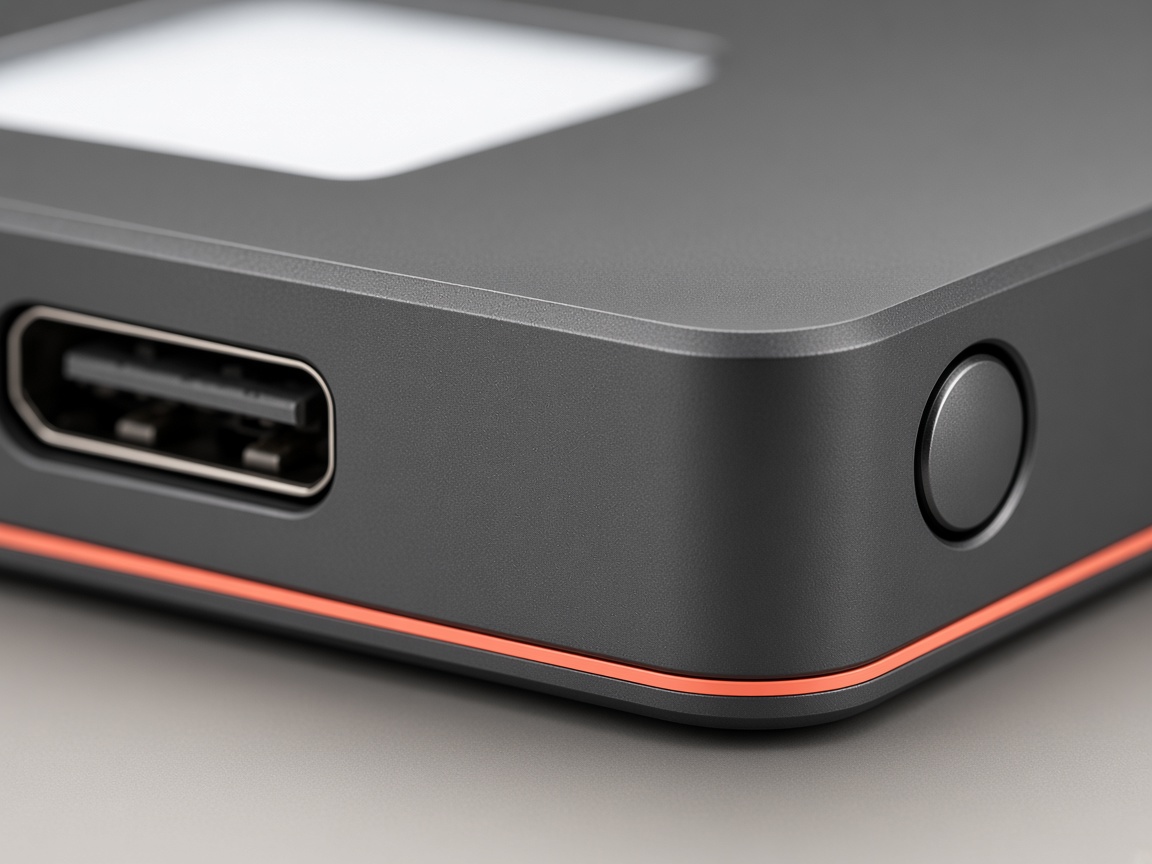
A laptop processor is built to run a crowd. Browsers, updaters, chat clients, and preview panes share memory, share the disk, and share a user’s trust. A private key stored in that crowd is only as quiet as the noisiest program. Hardware wallets grew up around a different component: a security chip of the kind already used to protect secrets inside identity documents.
On the Yenao Wallet, that chip is where the key is born. The creation happens on the device, after you have set a PIN, and the key is not imported from a file on the computer. Importing would mean the secret had already lived somewhere else. Starting on the chip means the secret’s first room is also its only room.
What stays inside
The chip will produce a signature. It will not produce the key. That distinction is the product. A signature lets a network accept an action that the key approved. The key itself remains on the silicon. USB-C can carry the request in and the signature out. It is the wrong pipe for the secret, and the firmware does not treat it as one.
Yenao is the thin layer around this behavior. It is firmware on the device, not a general operating system for a desk computer. It knows how to wake, how to draw the screen from the chip, how to read the button, and how to refuse a request that the button did not bless. There is no second mode in which the same chip becomes an ordinary computer.
Why there is no radio
A wireless radio is another door. It is useful in headphones and awkward next to a key that is supposed to meet the outside world only through a cable you can see. The Yenao Wallet leaves the radio off the board entirely. If the cable is not plugged in, the device is quiet. There is no background pairing and no account session sitting open in a pocket.
A smaller computer, on purpose
People sometimes expect a hardware wallet to feel like a phone: bright, broad, full of features. The studio went the other way. One screen, one button, one chip, one cable. The limits are how you can explain the object to someone else in a minute, and how you can check it yourself without a manual open beside you.
The chip does not make the person careful. It gives the careful person a place where careful is even possible. That place is smaller than a phone, and that is why it can be trusted with a key the phone should never hold.